


- Hauptunterschiede zwischen 12V- und 24V-Wasserpumpen
- Vor- und Nachteile von 12V- vs. 24V-Wasserpumpen
- Beste Anwendungen für 12V- und 24V-Pumpen
- Überlegungen zu Solarwasserpumpen (12V vs. 24V)
- Wie man zwischen 12V- und 24V-Wasserpumpen wählt
- FAQs zu 12V- vs. 24V-Wasserpumpen
Flowatt hilft Heimwerkern, die im Van leben, und Off-Grid-Bauern, die perfekte Gleichstrom-Wasserpumpe zu finden. Eine Frage, die wir immer wieder hören: "Soll ich eine 12V- oder eine 24V-Wasserpumpe nehmen?"
Die ehrliche Antwort? Es hängt von Ihrem Setup ab. Wenn Sie es falsch machen, haben Sie einen schwachen Durchfluss, verbrannte Komponenten oder verschwendete Batterieleistung.
Deshalb haben wir diesen Leitfaden erstellt – basierend auf realer Erfahrung, nicht nur auf technischen Daten. Wir führen Sie durch Strom, Wärme, Verkabelungsentfernung und Solarkompatibilität.
Hauptunterschiede zwischen 12V- und 24V-Wasserpumpen
Die Wahl zwischen 12V- und 24V-Pumpen hängt von der Stromaufnahme ab. Eine 12V-Pumpe benötigt die doppelte Stromstärke einer 24V-Pumpe, um dieselbe Leistung zu erzeugen.
Unterschiede bei Spannung, Strom und Leistung:
Die Wahl zwischen einer 12V-Wasserpumpe und einer 24V-Wasserpumpe hängt von einem Hauptfaktor ab: dem Strom.
Leistung (Watt) = Spannung × Strom.
Um die gleiche Wattleistung zu erzeugen, zieht eine 12V-Pumpe die doppelte Stromstärke einer 24V-Pumpe. Zum Beispiel zieht eine 240W-Pumpe, die mit 12V betrieben wird, 20 Ampere, während die gleiche Leistung bei 24V nur 10 Ampere zieht. Dieser geringere Strom ist der Schlüssel zu allem anderen.
Dieser geringere Strom – er beeinflusst vier kritische Bereiche:
- Kabelquerschnitt – Geringerer Strom bedeutet, dass Sie dünnere, günstigere Kabel verwenden können (14-16 AWG für 24V vs. 10-12 AWG für 12V)
- Spannungsabfall – Geringerer Strom verliert weniger Spannung über die Entfernung, sodass 24V-Pumpen Hunderte von Metern weiter betrieben werden können als 12V-Pumpen
- Wärmeerzeugung – Geringerer Strom erzeugt weniger Wärme, was weniger Energieverschwendung und einen sichereren Betrieb bedeutet
- Lebensdauer der Komponenten – Weniger Wärme bedeutet weniger Belastung für Pumpe und Verkabelung, sodass 24V-Pumpensysteme typischerweise länger halten
Wirkungsgrad und Wärmeerzeugung:
Der Wirkungsgrad einer Wasserpumpe bestimmt, wie gut sie elektrische Energie in mechanische Energie umwandelt. Effizientere Pumpen erzeugen weniger Wärme, wodurch sie für den Dauerbetrieb besser geeignet sind.
- 12V-Wasserpumpe: Typischerweise weniger effizient aufgrund der höheren Stromaufnahme, was zu erhöhter Wärmeerzeugung führt, insbesondere unter hoher Last.
- 24V-Wasserpumpe: Im Allgemeinen effizienter, da sie weniger Strom aufnimmt, weniger Wärme erzeugt und einen kontinuierlicheren Betrieb ermöglicht.
Durchflussrate und Druckleistung:
Die Spannung einer Brunnenwasserpumpe allein bestimmt nicht die Durchflussrate oder den Druck – das ist eine Funktion des Pumpendesigns und der Wattleistung. Eine 12V-Wasserpumpe und eine 24V-Wasserpumpe mit der gleichen Wattleistung können den gleichen Durchfluss und Druck liefern. Der Unterschied besteht darin, dass die 24V-Pumpe dies mit weniger Strom erledigt, was weniger Wärme und geringere Verkabelungskosten bedeutet. Für anspruchsvolle Anwendungen, die einen hohen Durchfluss oder eine tiefe Förderung erfordern, ist 24V die intelligentere Plattform, auf der man aufbauen kann.
12V vs 24V Wasserpumpen: Komplette Tabelle:
| Merkmal | 12V Wasserpumpe | 24V Wasserpumpe |
|---|---|---|
| Stromaufnahme | Höher (2x von 24V) | Niedriger (1/2 von 12V) |
| Empfohlener Kabelquerschnitt | 10–12 AWG | 14–16 AWG |
| Spannungsabfall | Deutlich über die Entfernung | Minimal über die gleiche Entfernung |
| Am besten geeignet für | Deckreinigung, Wohnmobile & Camper, kleine Gärten | Tiefe Brunnen, lange Kabelwege, größere Systeme |
| Effizienz | Mäßig | Hoch |
| Installationskosten | Höher (wegen dickerem Kabel) | Niedriger (dünneres Kabel) |
Hinweis: Wenn Sie eine Gleichstrom-Brunnenwasserpumpe für einen Tiefbrunnen oder eine lange Strecke betreiben, wählen Sie eine 24V-Wasserpumpe. Für kleine Arbeiten im Nahbereich ist eine 12V-Wasserpumpe völlig ausreichend.
Vor- und Nachteile von 12V- vs. 24V-Wasserpumpen
Bei der Entscheidung zwischen 12V-Wasserpumpen und 24V-Wasserpumpen hilft das Verständnis der Vor- und Nachteile jeder Option, die richtige Wahl für Ihre spezifische Anwendung zu treffen.
Vorteile von 12V-Wasserpumpen
- Weite Verfügbarkeit – 12V ist die gebräuchlichste Spannung für Gleichstrom-Wasserpumpen, die in fast jedem Wohnmobil-, Marine- oder Solarladen zu finden ist
- Einfacher Austausch – Wenn eine Pumpe ausfällt, ist ein direkter 12V-Ersatz einfach und kostengünstig zu finden
- Kompatibilität mit gängigen Batterien – Die meisten handelsüblichen Batterien (Autobatterien, Deep-Cycle-Marinebatterien, LiFePO4-Batterien, Solarbatterien) sind 12V
- Niedrigere Anschaffungskosten – 12V-Pumpen sind in der Regel günstiger als ihre 24V-Pendants
- Ideal für kleine Anwendungen – Perfekt für Wohnmobil-Wassersysteme, Gartenbewässerung, kleine Viehbewässerung und tragbare Aufbauten
Vorteile von 24V-Wasserpumpen
- Geringere Stromaufnahme – Die Hälfte des Stroms einer 12V-Pumpe bei gleicher Wattleistung, was weniger Wärme und weniger Energieverschwendung bedeutet
- Längere Kabelwege – Deutlich geringerer Spannungsabfall ermöglicht es, Pumpen Hunderte von Metern von Stromquellen entfernt zu platzieren
- Dünneres, günstigeres Kabel – Verwenden Sie 14-16 AWG anstelle von 10-12 AWG, was bei langen Kabelwegen Geld spart
- Besserer Wirkungsgrad – Weniger Energieverlust durch Wärme bedeutet mehr Leistung für das Pumpen von Wasser
- Längere Lebensdauer der Komponenten – Geringere Wärme und geringerer Strom reduzieren die Belastung von Pumpenmotor, Steuerung und Verkabelung
- Ideal für Tiefbrunnen und große Systeme – Bewältigt lange Kabelwege und Hochleistungsanwendungen problemlos
- Bessere Skalierbarkeit – Einfachere Erweiterung Ihres Systems mit zusätzlichen Panels oder Batterien in der Zukunft
Hinweis: Wenn Ihr Setup klein, tragbar oder budgetsensibel ist, erledigen 12V-Wasserpumpen die Aufgabe einfach und kostengünstig. Wenn Sie jedoch eine Langstreckenpumpung, Tiefbrunnenleistung oder langfristige Effizienz benötigen, sind 24V-Wasserpumpen die zusätzliche Investition wert.
Beste Anwendungen für 12V- und 24V-Pumpen
Die Wahl der richtigen Spannung beginnt damit, zu verstehen, wofür jedes System ausgelegt ist. Hier ist eine Übersicht über die besten Anwendungsfälle für Niederspannungs-Wasserpumpensysteme.
Wofür wird eine 12V-Wasserpumpe verwendet?
12V-Wasserpumpen sind die erste Wahl für kleinere, tragbare und leichtere Anwendungen. Da sie auf einer gängigen Niederspannungs-Wasserpumpenplattform laufen, lassen sie sich problemlos mit Standard-Autobatterien, kleinen Solarmodulen und tragbaren Stromversorgungen koppeln.
Gängige Anwendungen von 12V-Wasserpumpen sind:
- Wohnmobile & Camper – Druckbeaufschlagung von Wassersystemen für Spülen, Duschen und Toiletten in Freizeitfahrzeugen. Eine Niederspannungs-Wasserpumpe ist ideal für das mobile Leben, da sie sicher mit dem vorhandenen 12V-Bordnetz des Fahrzeugs betrieben wird.
- Deckwaschanlage – Bootsbesitzer verwenden kompakte 12V-Pumpen für die Reinigung an Deck, um Wasser von Bord oder aus einem Frischwassertank zu entnehmen, um Salz, Schmutz und Ablagerungen abzuspülen. Diese Pumpen sind klein, einfach zu installieren und ziehen minimalen Strom.
- Gartenbewässerung – Kleinere Bewässerungssysteme für Gemüsegärten, Gewächshäuser oder Tropfbewässerung.
- Tragbarer Transfer – Das Umfüllen von Wasser aus einer Regentonne, einem Wassertank oder einem flachen Bach für temporäre Bedürfnisse.
- Viehtränke – Kleine Tröge oder Tanks, bei denen die Pumpe nahe an der Wasserquelle und der Stromversorgung ist.
Wofür wird eine 24V-Wasserpumpe verwendet?
Eine 24V-Wasserpumpe wird für den Wassertransport über weite Strecken, den Dauerbetrieb und Systeme mit hohem Bedarf wie Tiefbrunnen, Bewässerung und netzunabhängige Wasserversorgung eingesetzt. Sie ist aufgrund ihres geringeren Stroms und des reduzierten Spannungsabfalls effizienter und zuverlässiger.
Gängige Anwendungen von 24V-Wasserpumpen sind:
-
Tiefbrunnenpumpen – 24V-Pumpen sind ideal für Tiefbrunnen (30–90 m) und liefern stabilen Druck und bessere Leistung über große Entfernungen mit minimalem Spannungsabfall.
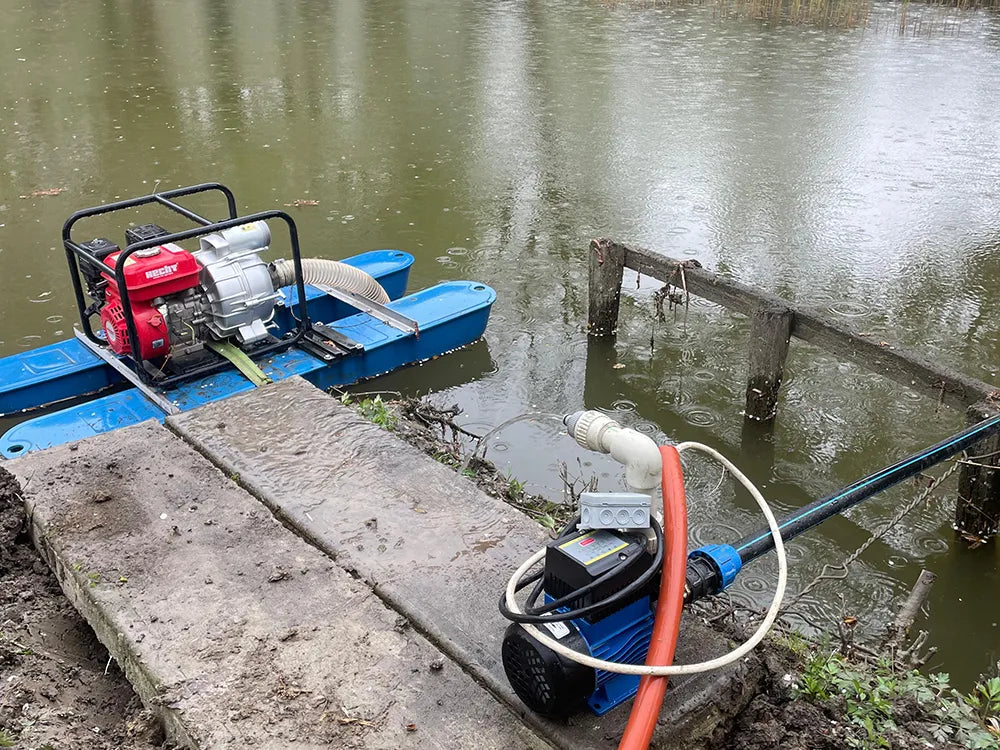
- Langstrecken-Wassertransport – Transport von Wasser aus einem Teich, Bach oder Speichertank zu einem Bauernhof oder Haus in Hunderten von Metern Entfernung. Zum Beispiel nutzte einer unserer Kunden in Ungarn die 24V Solar-Oberflächen-Kreiselpumpe von Flowatt, um Wasser effizient aus einem tiefen Teich zu pumpen und so einen konstanten Druck und minimalen Spannungsverlust auch über große Entfernungen zu gewährleisten.
- Großflächige Bewässerung – Bauernhöfe, Obstplantagen und Baumschulen, die täglich große Wassermengen bewegen müssen.
- Off-Grid-Höfe – Permanente Wassersysteme für c
- Kommerzielle Anwendungen – Gewächshauskühlung, Aquakultur-Zirkulation oder Viehtränke für größere Herden.
Überlegungen zu Solarwasserpumpen (12V vs 24V)
Eine 12V Solarwasserpumpe und eine 24V Solarwasserpumpe können die gleiche Wassermenge bewegen. Aber die Solarmodule, Batterien und Verkabelung, die Sie benötigen, sind völlig unterschiedlich. Hier erfahren Sie, was Sie wissen müssen, bevor Sie kaufen.
Kompatibilität mit Solarmodulen
Die Spannung Ihrer Gleichstrom-Wasserpumpe muss harmonisch mit Ihrer Solaranlage zusammenarbeiten. So vergleichen sich 12V- und 24V-Systeme:
12V Gleichstrom-Wasserpumpe – Anforderungen an Solarmodule:
- Benötigt Panels mit einer Ausgangsspannung typischerweise zwischen 18-22V (ein Standard-"12V Nenn"-Solarmodul)
- Kann direkt von einem einzelnen Solarmodul oder einer kleinen Anlage betrieben werden
- Funktioniert mit kleinen, tragbaren Solaranlagen (z.B. 100W bis 400W)
- Ideal für Wohnmobile, Camper und kleine Gartenanlagen
24V Gleichstrom-Wasserpumpe – Anforderungen an Solarmodule:
Benötigt Panels mit einer Ausgangsspannung typischerweise zwischen 30-45V (zwei 12V-Nennpanels in Reihe oder dedizierte 24V-Panels)
- Benötigt mindestens zwei Solarmodule, die in Reihe geschaltet sind, um die erforderliche Spannung zu erreichen
- Funktioniert mit größeren Anlagen (500W bis 2.000W+)
- Ideal für Tiefbrunnen, Bewässerung von Farmen und permanente netzunabhängige Installationen
Wie wählt man zwischen 12V- und 24V-Wasserpumpen?
Die Wahl der besten Spannung für Ihre Wasserpumpe kann schwierig sein. Hier ist eine einfache Aufschlüsselung, die Ihnen bei der Entscheidung zwischen einer 12-Volt-Wasserpumpe und einer 24-Volt-Wasserpumpe für Ihr spezifisches Setup hilft.
1. Passen Sie Ihre Batterien an (Die Goldene Regel)
Wählen Sie eine 12V-Wasserpumpe, wenn Sie eine einzelne 12V-Batterie haben. Dies ist üblich in Wohnmobilen, Campervans, Booten und Autos.
Wählen Sie eine 24V-Wasserpumpe, wenn Sie eine 24V-Batteriebank haben (zwei 12V-Batterien in Reihe). Dies ist typisch für größere netzunabhängige Hütten und Lastwagen.
2. Berücksichtigen Sie Ihre Verkabelungsentfernung
12V ist für kurze Strecken (unter 6 Meter) in Ordnung. Ersatzteile für 12V-Pumpen sind leichter zu finden.
24V ist besser für lange Strecken. Da es weniger Strom (Ampere) verbraucht, haben Sie weniger Spannungsabfall. Das spart Ihnen Geld bei teuren dicken Kupferkabeln.
3. Denken Sie an Effizienz und Wärme
24V-Systeme laufen im Allgemeinen kühler und effizienter. Sie ziehen die Hälfte der Ampere eines 12V-Systems für die gleiche Leistungsabgabe.
Wenn Sie planen, die Pumpe stundenlang zu betreiben (z. B. netzunabhängiges Solar-Wasserpumpen), ist eine 24-Volt-Wasserpumpe in der Regel die klügere Langzeitwahl.
4. Überprüfen Sie Ihre Solaranlage
12V-Pumpen lassen sich problemlos mit kleinen 100W-Solarmodulen und einfachen PWM-Ladereglern kombinieren.
24V-Pumpen sind der Standard für Hochdruckbewässerung und die Anpassung der Spannung größerer MPPT-Solar-Laderegler.
5. Berücksichtigen Sie zukünftige Upgrades
Wenn Sie glauben, später weitere Geräte hinzuzufügen, beginnen Sie mit einem 24V-Wasserpumpensystem. Es bewältigt höhere Leistungsanforderungen, ohne massive Kabel zu benötigen.
Beispiel: 12V Membranpumpe vs. 24V Kreiselwasserpumpe
Um den Unterschied zwischen 12V- und 24V-Wasserpumpen besser zu verstehen, betrachten wir eine reale Anwendung einer 12V-Membranpumpe und vergleichen sie mit einem typischen 24V-Kreiselwasserpumpensystem.
12V Wasserpumpen Beispiel (12V Membranpumpensystem)
Eine 12V Membranpumpe wird häufig in Wohnmobil-Wassersystemen und tragbaren Aufbauten eingesetzt, bei denen der Wasserbedarf relativ gering und die Entfernungen kurz sind.
Zum Beispiel liefert eine 12VDC 120W Membranpumpe typischerweise:
- Durchflussrate: 10 l/min
- Maximale Förderhöhe: 130 m
- Druck: 0,8 MPa
- Stromversorgung: 12V Batterie oder kleines Solaranlagensystem (100–300W)
In dieser Konfiguration ist die 12V Membranpumpe ideal für:
- Wohnmobilspülen und -duschen
- Tragbare Wassertanks
- Kleine Gartenbewässerungssysteme
Sie funktioniert am besten, wenn die Verkabelungsentfernung kurz und der Wasserbedarf intermittierend ist.
FAQs zu 12V- vs. 24V-Wasserpumpen
24V Wasserpumpen Vergleich (Solar-Kreiselpumpe Beispiel):
Im Gegensatz dazu ist ein 24V-Wasserpumpensystem für Anwendungen mit höherem Bedarf und langen Distanzen konzipiert, wie z.B. Tiefbrunnen, Bewässerung und kontinuierliche Wassertransportsysteme.
Ein reales Beispiel ist die Flowatt 24V 0,3 PS Solar-Oberflächen-Kreiselpumpe (1-Zoll-Ausgang, 25 m Förderhöhe), die in Off-Grid- und landwirtschaftlichen Anwendungen weit verbreitet ist.
Verglichen mit einem 12V-System:
- Eine 24V-Pumpe zieht die Hälfte des Stroms
- Sie leistet über lange Kabelwege mehr
- Sie ist effizienter für den Dauerbetrieb
- Sie ist besser geeignet für Bewässerungs- und Wassertransportsysteme
Im realen Einsatz wird diese 24V Solar-Oberflächenwasserpumpe häufig verwendet für:
- Bewässerung aus Teichen, Flüssen oder Speichertanks
- Garten- und Kleinfarm-Bewässerungssysteme
- Off-Grid-Solarpumpenanlagen
- Wassertransportanwendungen über mittlere Distanzen
Kann ich eine 12V-Wasserpumpe mit einem 24V-Batteriesystem betreiben?
Nein, nicht direkt. Eine 12V-Wasserpumpe direkt an eine 24V-Batteriebank anzuschließen, liefert die doppelte beabsichtigte Spannung. Dies führt dazu, dass der Pumpenmotor mit etwa der doppelten seiner ausgelegten Geschwindigkeit dreht, was zu:
- Schneller Überhitzung – Die Motorwicklungen überschreiten innerhalb weniger Minuten die sichere Temperatur
- Vorzeitigem Ausfall – Eine dauerhafte Beschädigung der internen Komponenten ist so gut wie sicher
- Erlöschen der Garantie – Die meisten Hersteller decken Schäden durch Spannungsfehlanpassung nicht ab
- Potenzielle Brandgefahr – Überhitzende Komponenten können die Isolierung schmelzen oder nahegelegene Materialien entzünden
Kann ich eine 24V-Wasserpumpe mit einer 12V-Batterie betreiben?
Ja, aber mit schlechten Ergebnissen. Eine 24V-Wasserpumpe, die mit einer 12V-Batterie betrieben wird, erhält nur die Hälfte der benötigten Spannung. Dies führt zu:
- Langsamer Betrieb – Die Pumpe läuft mit ca. 50% ihrer normalen Geschwindigkeit
- Reduzierte Durchflussrate – Erwarten Sie 40-60% des Nennflusses, abhängig vom Pumpendesign
- Schwacher Druck – Die Pumpe kann Schwierigkeiten haben, selbst moderate Förderhöhen zu überwinden
- Mögliches Blockieren – Unter Last hat die Pumpe möglicherweise nicht genug Drehmoment, um zu starten oder weiterzulaufen
- Keine Beschädigung der Pumpe – Im Gegensatz zu Überspannung führt Unterspannung selten zu einem sofortigen Ausfall, aber die Leistung ist stark beeinträchtigt


